
NF M60-312-1
NF M60-312-1

NF M60-312-1

June 2019
Standard Cancelled

Nuclear energy - Measurement of environmental radioactivity - Air - Part 1: Determination of the activity concentration of atmospheric tritium sampled by the sparging technique (air through water)

Le présent document décrit une méthode de prélèvement par barbotage pour déterminer la teneur en tritium (vapeur et/ou gaz) de l''air dans l''environnement. La limite de détection de cette méthode est de l''ordre de 0,2 Bq.m-3 à 0,5 Bq.m-3 pour une durée de prélèvement d''environ une semaine.

Main informations

Collections

National standards and national normative documents

Thematics

Sécurité, Gestion des risques et SST, QSE

Publication date

June 2019

Release date

juillet 2023

Number of pages

37 p.

Reference

NF M60-312-1

ICS Codes

13.280   Radiation protection
17.240   Radiation measurements
27.120.01   Nuclear energy in general

Print number

3 - décembre 2021
Sumary
Nuclear energy - Measurement of environmental radioactivity - Air - Part 1: Determination of the activity concentration of atmospheric tritium sampled by the sparging technique (air through water)

Le présent document décrit une méthode de prélèvement par barbotage pour déterminer la teneur en tritium (vapeur et/ou gaz) de l''air dans l''environnement. La limite de détection de cette méthode est de l''ordre de 0,2 Bq.m-3 à 0,5 Bq.m-3 pour une durée de prélèvement d''environ une semaine.
Replaced standards (1)
NF M60-312
NF M60-312
October 1999
Standard Cancelled
Nuclear energy - Measurement of environmental radioactivity-Air - Determination by liquid scintillation of the activity concentration of atmospheric tritium sampled by the sparging technique (air through water)

Standard replaced by (1)
NF ISO 20045
NF ISO 20045
July 2023
Standard Cancelled
Measurement of the radioactivity in the environment - Air: tritium - Test method using bubbler sampling

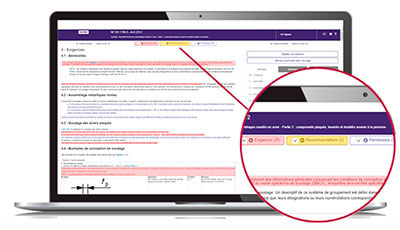
ZOOM ON ... the Requirements department

To comply with a standard, you need to quickly understand its issues in order to determine its impact on your activity.

The Requirements department helps you quickly locate within the normative text:

  • mandatory clauses to satisfy,
  • non-essential but useful clauses to know, such as permissions and recommendations.

The identification of these types of clauses is based on the document "ISO/IEC Directives, Part 2 - Principles and rules of structure and drafting of ISO documents" as well as on a constantly enriched list of verbal forms.

With Requirements, quickly access the main part of the normative text!


What is the Redline format?
New: UPSELL service
Need to identify, monitor and decipher standards?