NF EN ISO 7730
NF EN ISO 7730

NF EN ISO 7730

March 2006
Standard Cancelled

Ergonomics of the thermal environment — Analytical determination and interpretation of thermal comfort using calculation of the PMV and PPD indices and local thermal comfort criteria

Le présent document a pour objet de présenter une méthode de prévision de la sensation thermique et du degré d''inconfort (insatisfaction thermique) des personnes exposées à des ambiances thermiques modérées et de prescrire des conditions d''ambiances thermiques acceptables du point de vue du confort thermique général et des inconforts locaux.

Main informations

Collections

National standards and national normative documents

Thematics

Sécurité, Silver économie, Gestion des risques et SST, Accessibilité, QSE

Publication date

March 2006

Number of pages

60 p.

Reference

NF EN ISO 7730

ICS Codes

13.180   Ergonomics

International kinship

ISO 7730:2005

European kinship

EN ISO 7730:2005
Sumary
Ergonomics of the thermal environment — Analytical determination and interpretation of thermal comfort using calculation of the PMV and PPD indices and local thermal comfort criteria

Le présent document a pour objet de présenter une méthode de prévision de la sensation thermique et du degré d''inconfort (insatisfaction thermique) des personnes exposées à des ambiances thermiques modérées et de prescrire des conditions d''ambiances thermiques acceptables du point de vue du confort thermique général et des inconforts locaux.
Replaced standards (1)
NF EN ISO 7730
NF EN ISO 7730
December 1995
Standard Cancelled
Moderate thermal environments. Determination of the pmv and ppd indices and specification of the conditions for thermal comfort.

Standard replaced by (1)
NF EN ISO 7730
NF EN ISO 7730
September 2025
Standard Current
Ergonomics of the thermal environment - Analytical determination and interpretation of thermal comfort using calculation of the PMV and PPD indices and local thermal comfort criteria

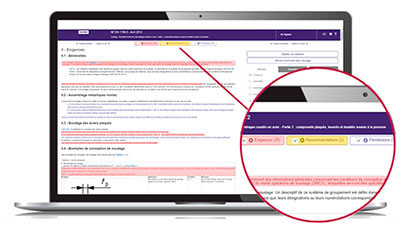
ZOOM ON ... the Requirements department

To comply with a standard, you need to quickly understand its issues in order to determine its impact on your activity.

The Requirements department helps you quickly locate within the normative text:

  • mandatory clauses to satisfy,
  • non-essential but useful clauses to know, such as permissions and recommendations.

The identification of these types of clauses is based on the document "ISO/IEC Directives, Part 2 - Principles and rules of structure and drafting of ISO documents" as well as on a constantly enriched list of verbal forms.

With Requirements, quickly access the main part of the normative text!


New: UPSELL service
Need to identify, monitor and decipher standards?