
ISO 13287:2019
ISO 13287:2019

ISO 13287:2019

October 2019
International standard Current

Personal protective equipment - Footwear - Test method for slip resistance

This document specifies a method of test for the slip resistance of PPE footwear. It is not applicable to special purpose footwear containing spikes, metal studs or similar.Footwear claiming ?slip resistance' would be deemed an item of personal protective equipment.NOTE For product development purposes, sole units, outsoles or other soling components such as top pieces may be tested.

View the extract
Main informations

Collections

International ISO standards

Publication date

October 2019

Number of pages

23 p.

Reference

ISO 13287:2019

ICS Codes

13.340.50   Leg and foot protection

Print number

1
Sumary
Personal protective equipment - Footwear - Test method for slip resistance

This document specifies a method of test for the slip resistance of PPE footwear. It is not applicable to special purpose footwear containing spikes, metal studs or similar.

Footwear claiming ?slip resistance' would be deemed an item of personal protective equipment.

NOTE For product development purposes, sole units, outsoles or other soling components such as top pieces may be tested.

Replaced standards (1)
ISO 13287:2019
ISO 13287:2019
October 2019
International standard Current
Personal protective equipment - Footwear - Test method for slip resistance

This document specifies a method of test for the slip resistance of PPE footwear. It is not applicable to special purpose footwear containing spikes, metal studs or similar. Footwear claiming ?slip resistance' would be deemed an item of personal protective equipment. NOTE For product development purposes, sole units, outsoles or other soling components such as top pieces may be tested.

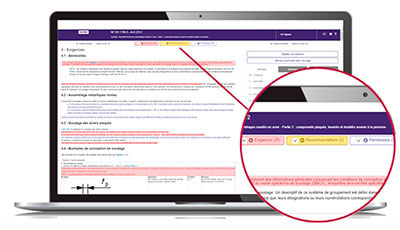
ZOOM ON ... the Requirements department

To comply with a standard, you need to quickly understand its issues in order to determine its impact on your activity.

The Requirements department helps you quickly locate within the normative text:

  • mandatory clauses to satisfy,
  • non-essential but useful clauses to know, such as permissions and recommendations.

The identification of these types of clauses is based on the document "ISO/IEC Directives, Part 2 - Principles and rules of structure and drafting of ISO documents" as well as on a constantly enriched list of verbal forms.

With Requirements, quickly access the main part of the normative text!


What is the Redline format?
Need to identify, monitor and decipher standards?