
NF EN ISO 17556

NF EN ISO 17556

July 2005
Standard Cancelled

Plastics - Determination of the ultimate aerobic biodegradability in soil by measuring the oxygen demand in a respirometer or the amount of carbon dioxide evolved

ISO 17556:2003 specifies a method for determining the ultimate aerobic biodegradability of plastic materials in soil by measuring the oxygen demand in a closed respirometer or the amount of carbon dioxide evolved. The method is designed to yield an optimum degree of biodegradation by adjusting the humidity of the test soil.If a non-adapted soil is used as an inoculum, the test simulates the biodegradation processes which take place in a natural soil environment; if a pre-exposed soil is used, the method can be used to investigate the potential biodegradability of a test material.This method applies to the following materials:Natural and/or synthetic polymers, copolymers or mixtures of these.Plastic materials which contain additives such as plasticizers or colorants.Water-soluble polymers.Materials which, under the test conditions, do not inhibit the activity of the microorganisms present in the soil. Inhibitory effects can be measured using an inhibition control or by another suitable method (see e.g. ISO 8192). If the test material inhibits the microorganisms in the soil, a lower test material concentration, another type of soil or a pre-exposed soil can be used.

Main informations

Collections

National standards and national normative documents

Publication date

July 2005

Number of pages

25 p.

Reference

NF EN ISO 17556

ICS Codes

13.080.05   Examination of soils in general
83.080.01   Plastics in general

Classification index

T51-804

Print number

1 - 27/06/2005

International kinship

European kinship

EN ISO 17556:2004
Sumary
Plastics - Determination of the ultimate aerobic biodegradability in soil by measuring the oxygen demand in a respirometer or the amount of carbon dioxide evolved

ISO 17556:2003 specifies a method for determining the ultimate aerobic biodegradability of plastic materials in soil by measuring the oxygen demand in a closed respirometer or the amount of carbon dioxide evolved. The method is designed to yield an optimum degree of biodegradation by adjusting the humidity of the test soil.

If a non-adapted soil is used as an inoculum, the test simulates the biodegradation processes which take place in a natural soil environment; if a pre-exposed soil is used, the method can be used to investigate the potential biodegradability of a test material.

This method applies to the following materials:

  1. Natural and/or synthetic polymers, copolymers or mixtures of these.
  2. Plastic materials which contain additives such as plasticizers or colorants.
  3. Water-soluble polymers.
  4. Materials which, under the test conditions, do not inhibit the activity of the microorganisms present in the soil. Inhibitory effects can be measured using an inhibition control or by another suitable method (see e.g. ISO 8192). If the test material inhibits the microorganisms in the soil, a lower test material concentration, another type of soil or a pre-exposed soil can be used.
Standard replaced by (1)
NF EN ISO 17556
September 2012
Standard Cancelled
Plastics - Determination of the ultimate aerobic biodegradability of plastics materials in soil by measuring the oxygen demand in a respirometer or the amount of carbon dioxide evolved

ISO 17556:2012 specifies a method for determining the ultimate aerobic biodegradability of plastic materials in soil by measuring the oxygen demand in a closed respirometer or the amount of carbon dioxide evolved. The method is designed to yield an optimum degree of biodegradation by adjusting the humidity of the test soil. If a non-adapted soil is used as an inoculum, the test simulates the biodegradation processes which take place in a natural environment; if a pre-exposed soil is used, the method can be used to investigate the potential biodegradability of a test material. This method applies to the following materials: natural and/or synthetic polymers, copolymers or mixtures of these; plastic materials which contain additives such as plasticizers or colorants; water-soluble polymers. It does not necessarily apply to materials which, under the test conditions, inhibit the activity of the microorganisms present in the soil. Inhibitory effects can be measured using an inhibition control or by another suitable method. If the test material inhibits the microorganisms in the soil, a lower test material concentration, another type of soil or a pre-exposed soil can be used.

ZOOM ON ... the Requirements department
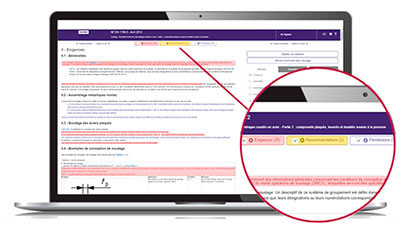
To comply with a standard, you need to quickly understand its issues in order to determine its impact on your activity.

The Requirements department helps you quickly locate within the normative text:
- mandatory clauses to satisfy,
- non-essential but useful clauses to know, such as permissions and recommendations.

The identification of these types of clauses is based on the document “ISO / IEC Directives, Part 2 - Principles and rules of structure and drafting of ISO documents ”as well as on a constantly enriched list of verbal forms.

With Requirements, quickly access the main part of the normative text!

With Requirements, quickly access the main part of the normative text!
New: UPSELL service
- The UPSELL service allows you to easily update one of your standards.
- With a single click, add a new language, the Requirements or Redline+ service and add one or more additional users.
- Whether you are in the process of acquiring a standard or it is already available in your personal space, the UPSELL service is available at every stage to help you understand it and implement it within your organization.
Need to identify, monitor and decipher standards?

COBAZ is the simple and effective solution to meet the normative needs related to your activity, in France and abroad.

Available by subscription, CObaz is THE modular solution to compose according to your needs today and tomorrow. Quickly discover CObaz!

Request your free, no-obligation live demo

I discover COBAZ