

NF EN ISO 22155
NF EN ISO 22155

NF EN ISO 22155

April 2013
Standard Cancelled

Soil quality - Gas chromatographic determination of volatile aromatic and halogenated hydrocarbons and selected ethers - Static headspace method

Main informations

Collections

National standards and national normative documents

Publication date

April 2013

Release date

avril 2016

Number of pages

30 p.

Reference

NF EN ISO 22155

ICS Codes

13.080.10   Chemical characteristics of soils

Print number

1 - avril 2013

International kinship

ISO 22155:2011

European kinship

EN ISO 22155:2013
Replaced standards (1)
NF ISO 22155
NF ISO 22155
January 2011
Standard Current
Soil quality -- Gas chromatographic determination of volatile aromatic and halogenated hydrocarbons and selected ethers -- Static headspace method

Standard replaced by (1)
NF EN ISO 22155
NF EN ISO 22155
May 2016
Standard Current
Soil quality - Gas chromatographic determination of volatile aromatic and halogenated hydrocarbons and selected ethers - Static headspace method

ISO 22155:2016 specifies a static headspace method for quantitative gas chromatographic determination of volatile aromatic and halogenated hydrocarbons and selected aliphatic ethers in soil. ISO 22155:2016 is applicable to all types of soil. The limit of quantification is dependent on the detection system used and the quality of the methanol grade used for the extraction of the soil sample. Under the conditions specified in this International Standard, the following limits of quantifications apply (expressed on basis of dry matter). Typical limit of quantification when using GC-FID: - volatile aromatic hydrocarbons: 0,2 mg/kg; - aliphatic ethers as methyl tert.-butyl ether(MTBE) and tert.-amyl methyl ether (TAME): 0,5 mg/kg. Typical limit of quantification when using GC-ECD: - volatile halogenated hydrocarbons: 0,01 mg/kg to 0,2 mg/kg. Lower limits of quantification for some compounds can be achieved by using mass spectrometry (MS) with selected ion detection (see Annex D).

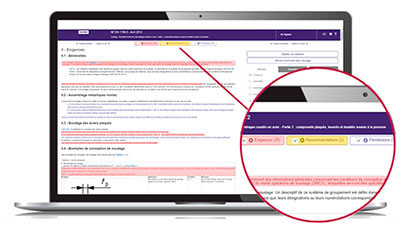
ZOOM ON ... the Requirements department

To comply with a standard, you need to quickly understand its issues in order to determine its impact on your activity.

The Requirements department helps you quickly locate within the normative text:

  • mandatory clauses to satisfy,
  • non-essential but useful clauses to know, such as permissions and recommendations.

The identification of these types of clauses is based on the document "ISO/IEC Directives, Part 2 - Principles and rules of structure and drafting of ISO documents" as well as on a constantly enriched list of verbal forms.

With Requirements, quickly access the main part of the normative text!


New: UPSELL service
Need to identify, monitor and decipher standards?