
NF EN ISO 27971
NF EN ISO 27971

NF EN ISO 27971

July 2015
Standard Cancelled

Cereals and cereal products - Common wheat (Triticum aestivum L.) - Determination of alveograph properties of dough at constant hydration from commercial or test flours and test milling methodology

Main informations

Collections

National standards and national normative documents

Publication date

July 2015

Release date

août 2023

Number of pages

74 p.

Reference

NF EN ISO 27971

ICS Codes

67.060   Cereals, pulses and derived products

Print number

1

International kinship

ISO 27971:2015

European kinship

EN ISO 27971:2015
Replaced standards (1)
NF EN ISO 27971
NF EN ISO 27971
July 2008
Standard Cancelled
Cereals and cereal products - Common wheat (Triticum aestivum L.) - Determination of alveograph properties of dough at constant hydration from commercial or test flours and test milling methodology

Standard replaced by (1)
NF EN ISO 27971
NF EN ISO 27971
June 2023
Standard Current
Cereals and cereal products - Common wheat (Triticum aestivum L.) - Determination of alveograph properties of dough at constant hydration from commercial or test flours and test milling methodology

This document specifies a method of determining, using an Alveograph, the rheological properties of different types of dough obtained from common wheat flour (Triticum aestivum L.) produced by industrial milling or laboratory milling. It describes the Alveograph test and how to use a laboratory mill to produce flour in two stages: —    stage 1: preparation of the wheat grain for milling to make it easier to separate the bran from the endosperm; —    stage 2: the milling process, including breaking between three fluted rollers, reduction of particle size between two smooth rollers and the use of a centrifugal sieving machine to grade the products.

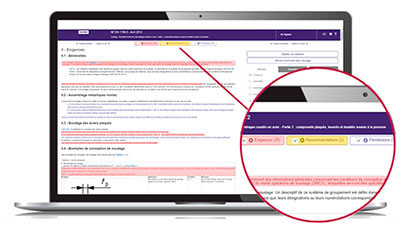
ZOOM ON ... the Requirements department

To comply with a standard, you need to quickly understand its issues in order to determine its impact on your activity.

The Requirements department helps you quickly locate within the normative text:

  • mandatory clauses to satisfy,
  • non-essential but useful clauses to know, such as permissions and recommendations.

The identification of these types of clauses is based on the document "ISO/IEC Directives, Part 2 - Principles and rules of structure and drafting of ISO documents" as well as on a constantly enriched list of verbal forms.

With Requirements, quickly access the main part of the normative text!


What is the Redline format?
New: UPSELL service
Need to identify, monitor and decipher standards?