NF L22-541
NF L22-541

NF L22-541

April 2001
Standard Current

Aircraft bolts and nuts - Hexagonal nuts, self-locking, ISO M or ISO MJ threads, in steel, cadmium plated, MoS2 lubricated - Classification : 1 100 MPa (at ambiant temperature) / 235 °C or in heat resisting steel, silver plated - Classification : 1 100 MPa (at ambient temperature) / 425 °C

La présente norme spécifie les caractéristiques des écrous hexagonaux, à freinage interne, à filetage ISO M, en acier, cadmiés, lubrifiés MoS, ou en acier résistant à chaud, argentés pour constructions aéronautiques. Classification: 1 100 MPa 1) / 235 °C 2) OU 1 100 M Pa 1) / 425 °C 2)

Main informations

Collections

National standards and national normative documents

Publication date

April 2001

Number of pages

6 p.

Reference

NF L22-541

ICS Codes

49.030.30   Nuts
Sumary
Aircraft bolts and nuts - Hexagonal nuts, self-locking, ISO M or ISO MJ threads, in steel, cadmium plated, MoS2 lubricated - Classification : 1 100 MPa (at ambiant temperature) / 235 °C or in heat resisting steel, silver plated - Classification : 1 100 MPa (at ambient temperature) / 425 °C

La présente norme spécifie les caractéristiques des écrous hexagonaux, à freinage interne, à filetage ISO M, en acier, cadmiés, lubrifiés MoS, ou en acier résistant à chaud, argentés pour constructions aéronautiques. Classification: 1 100 MPa 1) / 235 °C 2) OU 1 100 M Pa 1) / 425 °C 2)

Replaced standards (1)
NF L22-541
NF L22-541
March 1999
Standard Cancelled
Aircraft bolts and nuts. Hexagonal nuts, self-locking, ISO M threads, in steel, cadmium plated, MoS2 lubricated. Classification : 1100 MPa (at ambient temperature)/260 degrees Celsius, or heat resisting steel, silver plated. Classification : 1100 MPa (at ambient temperature)/425 degrees Celsius.

La présente norme spécifie les caractéristiques des écrous hexagonaux, à freinage interne, à filetage ISO M, en acier, cadmiés, lubrifiés MoS2, ou en acier résistant à chaud, argentés pour constructions aéronautiques.

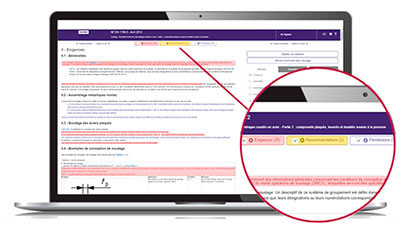
ZOOM ON ... the Requirements department

To comply with a standard, you need to quickly understand its issues in order to determine its impact on your activity.

The Requirements department helps you quickly locate within the normative text:

  • mandatory clauses to satisfy,
  • non-essential but useful clauses to know, such as permissions and recommendations.

The identification of these types of clauses is based on the document "ISO/IEC Directives, Part 2 - Principles and rules of structure and drafting of ISO documents" as well as on a constantly enriched list of verbal forms.

With Requirements, quickly access the main part of the normative text!


New: UPSELL service
Need to identify, monitor and decipher standards?